 Tigrai Online - Ethiopian Daily News

Tigrai State, The open-air Museum
LOCATION
Tigrai is the Northernmost of Ethiopias federal states located at 12o15 -4o57 longitude and 36o27- 39o59 latitude. The State of Tigrai shares common borders with Eritrea in the north, the State of Afar in the east, the State of Amhara in the south, and the Republic of the Sudan in the west. Excluding Mekelle town, the state capital, there are five administrative zones: comprising a total of 47 weredas (districts) and 673 tabias (sub-districts).
CAPITAL CITY
 Mekelle Tigraian capital city
POPULATION
 With a total population of 7.2 million which is about 7% of the total population of Ethiopia,{49.2% male and 50.85 female}, 85% of which live in the rural areas. The economically active age group accounts about 51.8 % of the total population. In terms of religion 95.5% of the population are Orthodox Christians, 4.1% and 0.4% are Muslims and Catholics respectively. Regarding ethnic composition, 94.98% are Tigrawai, 2.6% Agew/Amhara, 0.7% Erob and 0.05% Kunama. Tigrigna is the working language of the state.
| City or Town Name | Population |
|---|---|
| Mekelle | 226,000 |
| Adigrat | 76,314 |
| Axum | 51727 |
| Alamata | 49883 |
| Endaselase | 48335 |
| Adwa | 46645 |
| Maichew | 37581 |
| Korem | 32072 |
| Wukro | 31245 |
| Humera | 27807 |
History and Politics
 It is in Tigrai state the over 4 thousand year old Axumaite kingdom was once very powerful and had tremendous influence around present day Rea sea countries. It left rich architectural and archaeological heritage of rock-hewn churches and monuments. It was a highly literate society, soon developing an alphabet called Geez, and it is from the language Geez that modern Tigringya, the language of Tigrai has evolved. Christianity was introduced in the fourth century to this to the kingdom of Axum. Its monasteries became centers for learning, translating Greek and Hebrew books, including the Bible in the fifth century. By the end of the sixth century Islam was introduced to the kingdom Axom in Tigrai.
The Axumite heritage is still important in Tigrai today. The oblisks from this era are still standing in Axum today. They symbolize national pride and consciousness for all Tigraians. Today Axum a small town in central Tigrai is a tourist magnet attracting tourists from all over the world.
The Tigraians also had an important role in defending and defining today's Ethiopia and Eritrea from colonial powers. Emeror Yohannes the fourth, a Tigraian king of Kings of Ethiopia, defended the area from Egyptian, Italian and Sudanese invaders. The Italians were soundly defeated in the battle of Adwa in 1896. The first of its kind in black Africa for a modern colonial power to be defeated by a poorly armed, but determined, and ill-trained peasant army. Today not only Tigraians, and Ethiopians but all Africans feel tremendous pride from the defeat of the Italians by an African nation. It is one of black people of the world's brightest spots in history. It has been preserved since then as a symbol of black power over colonial Europe. Present day Ethiopian leaders also started the armed struggle from Tigrai in 1974. That movement eventually ousted the brutal Megstu regime in 1991 and gave Ethiopia its first taste of democracy in centuries.

Memhir Gebrekidan Desta interview with Radio Snit part 1, 2 and 3
Language
Most Tigraians speak Tigringya but there are small minorities that speak other languages. Saho, Afar, Kunam and Agew are also spoken by the respective communities. Tigringya has its own alphabet which is derived from Geez. It is spoken mostly in Tigrai but it is also spoken in southern Eritrea. Tigringya became the official language of the state of Tigrai when the derg regime colapsed in the 1990s. Tigrinya has been suppressed in Ethiopia until the country changed rulers in 1991. The Tigraians were not allowed to use their language in their local school system or judicial system prior to 1991. Amharic was forcebly taught in schools throughout Tigrai as a subject as well as a medium of instruction for all subjects until seventh grade. Today Tigraians are using the newly gotten freedom to use their own language to improve Tigringya as a written language.

Recently archaeologists discovered the oldest Christian book in Adwa monastery, Tigrai state, northern Ethiopia. Carbon dating techniques place the Garima Gospels between 330 and 650 AD. The 1,600 year-old texts are named after a monk, Abba Garima. According to legend, he copied out the Gospels in just one day after founding the Garima Monastery, near Adwa in the north of the country.
The vividly illustrated pages have been conserved by the Ethiopian Heritage Fund and it is hoped that the two volumes will be made available to visitors to the monastery which is in discussions to start a museum there.
MAJOR ECONOMIC ACTIVITIES
 About 83% of the population are farmers. Taff, wheat, corn, sorghum, barely Niger seed, flax seed and sesame are the main crops. Other agricultural products include pulses, beans, lentils, onions, vegetables and fruits and potatoes. Irrigation and terrace farming are used on the steep slopes. The region is also known for its export items of cotton, incense, sesame and minerals. 1.5 million hectares of land in the region is cultivable, of which one million hectares is being cultivated, while 420,877 hectares of land is terraced. Handicraft (gold smith, painting and wood sculptures) is another area of activity observed in the historic cities of the state.
Industry
Industry is still minimal but growing, some of the industry include an equipment manufacturing and industrial engineering company called Mesfin Industrial Engineering MIE where a wide range of products is manufactured at its industrial complex (35,000 m2 covered premises on a 120,000 m2 site), which is fully equipped with the state-of-the art machinery. It employs 600 well-trained industrial workers including designers, technologists, welders and quality assurance experts.
It designs, manufactures and installs equipment and components for the energy, mining, manufacturing transport and agriculture sectors. With an annual capacity of 3,000 trailers and semi-trailers, MIE is the biggest trailer manufacturer in East Africa.
MIE designs and manufactures vehicle bodies, trailers, as well as high & low-bed semi-trailers. Heavy-duty trucks are assembled at the Truck Assembly Plant in Mekelle. These trucks are especially suited for the road conditions in Africa and are competitively priced. MIE's product range includes inter-city and city buses, skip-loaders, and waste and sewer cleaners for the municipal services.
There are also a pharmaceutical factory, a textiles factory, a cement factory, a leather tanning factory, a marble cutting factory, a flour mill factory, a nail factory, a water purification factory, and a small shoe factory are some of them. Most new enterprises are small and medium scale.
The industrial including Mining and quarry manufacturing has grown in four years by 24.7%, which incorporates water, electric and construction activities.
Power supply until recently was dependent on generators, however, by the 1998 summer, the scheme to connect the region to the national grid was completed. The Tekeze project which is expected to generate about 310 mega watt will improve power supply of the state.. Telecommunications have improved over the past few years.
TOPOGRAPHY AND CLIMATE
 Most of the western, southern and central Tigrai is green fertile land. Centuries of erosion, deforestation and overgrazing have left some parts of the state, specially the eastern part with dry and treeless plains, hills and plateaus. Nevertheless, an amazing landscape of chains of mountains ranging from 3,250-3,500 meters, cliffs, ledges and precipice are natural attractions of the region. Two altitude extremes: the elevation of the region rises from 600-2,700 above sea level, the Tekeze Gorge, 550 meters above sea level and the "Kisad Gudo" peak at 3,935 meters above sea level are among Tigrai’s natural scenery which is classified into the central highland, the western lowland and eastern escarpments. The climate of the state is characterized as "Kolla" (semi arid) 39%, "Woina degua" (warm temperate) 49%, and "Degua" (temperate) 12%. The average annual rainfall is between 450-980 mm.
RIVERS AND LAKES
Tekeze and Mereb are international rivers that pass through the state of Tigrai with their sources in the Amhara and Eritrean Mountains, respectively. There are small rivers such as Geba, Worii, Berber, Arqoa, Teter, Seysa which are suitable for irrigation development. Tekeze is a promising source of hydroelectric power. Lake Ashenge, which is found in the state, is an interesting area for observing birds and for fishing.
LIVESTOCK
The State claims to have about 11.51 million domestic animals (1997 G.C.) of which 2.15 million are cattle, 5.63 million are sheep and goats and 392,000 are pack animals.
FAUNA
Elephant, leopard, klipspringer and bush back are among the wild animals that are found in the state.
Astounding recovery and healing of Tigrai State Forests.
Twenty five years after the end of the armed struggle the recovery of the natural beauty of Tigrai is astounding. The wild animals are coming back including elephants because their natural habitat is coming back.
MINERALS
Tigrai is one of the richest areas in Ethiopia in mineral resources. Some of the explored metallic minerals of the state include gold, copper, iron ore, zinc, lead, nickel, Asbestos, Silica sand, Kaolin, graphite, gypsum gemstone, marble, granite slate, limestone and dolomite are among the non-metallic minerals.
TOURISM AND HERITAGE
 Tigrai is among the few in the world, frequently mentioned in civilization and cultural lists of humanity for its universally accepted historic sites. The state has some of the most important historical monuments of the continent.
Tigrai is very well known for its pre-Christian monuments. The Axum obelisks or Steles (2nd century BC), the pre-Axumite Yeha’s "Temple of The Moon" (5th century BC), bath and palace of the Queen Sheba and the Ark of the Covenant, are among the most prominent.
The Ark of the Covenant, is said to have been brought from the Temple in Jerusalem by the first king of Axum Menlik. Moreover, the region has served as entrance of the two world religions Christianity in the 4th century AD, and Islam in the 6th century AD into Ethiopia.
The mosque of Negash which is found in the Kilte-Awlaelo district of Tigrai is also another historical site.
There are more than 120 rock-hewn churches and caves that serve as monasteries scattered over the mountains of Tigrai, containing gold and silver crosses, glittering crowns, manuscripts and stones bearing ancient Sabean inscriptions. These and other cultural heritages are priceless assets of the country.
St.Yred the geatest Ethiopian composer was born and raised just out side the city of Axum in Tigrai state
The present day Ethiopian flag traces it's origin to biblical time of the Axumite kingdom. The kings of Axum were using some variation of the tri color of the green yellow and red.
Tourism Development in Tigrai by Mulugeta Feseha PhD Principal Author, Teklehaimanot Gebresilasse PhD and Mr. Tekle Hagos Lecturer.
The new book covers the tourism resources of Tigrai, Mapping and data-basing the tourism resources, Changing these tourism resources into tourism products and Implementation of community based and environmentally friendly tourism in Tigrai.
INVESTMENT
The state of Tigrai has created favorable conditions and incentives in order to attract investors. If you want to invest in Tigrai there is many opportunities . So far, until the beginning of 1998, there were 361 projects with a capital of 4 billion Ethiopian Birr. These projects focus mainly on agriculture, industry, hotel and tourism, social services, mining, construction and transport. About 200,138 persons will benefit from the job opportunity created by these projects. The state also has large farming areas suitable for the production of cash crops such as cotton and different kinds of oilseeds.
EDUCATION
 Education services are improving since the war ended in 1991. As of 2006 there are 1,725 schools in total of which 113 pre school, 1598 primary, and 64 secondary high schools; 54 Community colleges including 1 teacher training institute; 2 technical schools; 1 business college; I nursing school , 1 agricultural college and 2 universities. Mekelle University with three campuses Which includes a medical school at Ayder campus, business school at adi haki campus and the main campus at enda Iyesooss which, can acomodate 15000 students. Axum University is almost completed constuction but it has been offcially inaugurated on Feb. 16 2007 and has 2400 students enrolled. By the time all the conctruction is completed Axum University would have the capacity to enroll 9000 students. Adigrat Unifersity is under construction when completed it will be huge. There are 51 primary and 13 secondary private and church schools in the state. Gross and net enrollment rate in primary and secondary schools increased by 482.6%.
Health
Health coverage in Tigrai was one of the lowest in Ethiopia. Only 12% of the society was getting some health benefits. Luck of health was used as a systematic tool to keep the people under developed by the central governments in the past. Health coverage was very minimal or it did not exist in most parts of the State before 1991. Since 1991 after the TPLF took power in Tigrai, the number of health posts or small clinics increase from 100 to 600, small hospitals from 10 to 40, central hospitals from 4 to 13 and one referral hospitals were built and are giving service to the public. The health coverage in this state from 1991 to 2006 grew from 12% to 70% and still growing.
Energy
The Tekeze Dam, a curved and arched dam that stands 188 meters tall is located in Tigrai state. The Tekeze High Dam was inaugurated on November 14, 2009 producing 300mw of electric power. Ethiopia gained about 30 percent more power by generating 300 megawatts of electricity from a reservoir holding 9.3 billion cubic meter of water.
Four 75-megawatts generators and four turbines beneath the dam are producing the pwoer. The project has created an artificial lake with a length of 75km and a total surface area of 3.5 square kilometres on both sides of the Tigray and Amhara regional states. This is believed to have the potential to produce an annual 419 tons of fish, according to figures released by EEPCo.


Mother Tigrai
Eternal glory to our martyrs!
 Tigrai is the mother of all civilizations in the horn of Africa. It is the Source of the Geez fidel, Christainity and Islam. Tigrai is the land of Qdoos Yaryed, Axum, Yeha and Wuqro Negash. Tigrai is the land of dauntless Emperors such as: Ezana, Kaleb, Armaha, Abraha, Elamda, Almeda, ZeraYakob... Yowhaness; Ras Alula, General Hayelom and much more. Tigrai is The home of the Ark of the covenant, the land of the just, brave, free and fair. We have nothing to apologize, be sorry or fear for in our history, but we have everything to be proud of.
Sponsored Links
Emperor Ezana Ella-Amda King of Kings of Axum

Emeror Ezana Ella-Amida was born from his father King of Kings Amida and his mother Princess Sofiya in 320 in the historical city of Axum, in Tigrai. His father died when he was a year old baby. Ezana had two brothers Seazana (Sheazana) and Hadefa (Adefa). Adefa is a small village in southern Adwa awraja. When he was 18 years old he took full control of the Kingdom of Axum. Ezana was a great warrior and he conquered many surrounding lands and their people.
He went on all the way to the upper Nile in Northern Sudan, Himar present day Yemen in the east and down south to the Northern Wolo Ethiopian highlands.
In 356 when he was 36 years old he led an expeditionary force across the Red Sea to reinforce the Axumite garrison in Tihama and try to open talks with the Himyarites in present day Yemen, whom Axum had been at war with on and off for over a century. The expeditionary force was back to their ship after a battle, but King of Kings Ezana was fatally wounded with an arrow to his throat and died in the ship. 1656 years to this year (2012) another hero of Tigrai died in the sea.
Emperor Ezana expanded the kingdom of Axum by two folds.
Emperor Yohannes IV, King of Zion and King of Kings of Ethiopia

His birth name was Kahsai Mrcha. He was born on July 12 1837 at Mai Beha Tembien. His father was Shum Tembien Mircha Woldekidan of Tembien. Mircha's mother Woyzero Workewoha Kalekirstos was the grand daoughter of Ras Suhulmikael Eskiyass of Adwa Where he traces his royal blood. Kahssai's (Emperor Yohannes) mother was Woyzero Silass Dimtsu, daoughter of Dejazmach Dimtsu of Enderta. Her mother was woyzero Tabotu Woldu Agame; sister of Dejazmach Sibagadis Woldu of Agame. So Emperor Yohannes on his father's side is from Timbien and Adwa. On his mother's side he is from Enderta and Agame.
He defeated Wagshum Gobeze (Emperor Tekle Giyorgis) on July 11 1871 30 kms from the city of Adwa. Gobeze had 60,000 troops and Kahssai had 12,000 troops. Gobeze's wife was kahssai's sister. Before the crushing defeat Gobeze's wife warrned him saying the following poem.  Dejazmach Kassai was crowned emperor January 12, 1872 at the historic Tigraian city of Axum. He took the name and title of Emperor Yohannes IV, King of Zion and King of Kings of Ethiopia, becoming the first emperor crowned in that historic city since Emperor Fasilides in 1632.
Emperor Yohannes was an extraordinary military leader and a very religious king. He was the top vanguard of Ethiopia. On October 11 1875 Egypt occupied the city-state of Harrar and they were advancing from the port of Masswa on the north. Yohannes marched up north and met them at Gundet on November 16 1875. The Egyptians did not know the local area and they were fooled in to marching in to a narrow and steep valley and were wiped out by the Eperor's troops hiding on the valley from the surrounding mountains.
Most of the Egyptian force, along with its many officers of European and North American background, was killed. He also defeated them again at the battle of Gura on march 9 1876.
At the end he was betrayed by the shewan king, menilk who secretly signed an agreement with Italians to invade the country from the north in exchange of the crown. In 1889 Yohannes was battling so many domestic and external enemies at the same time. The mahdists from sudan on the west, the Italians on the north, Menilk on the south and the Gojams on the south west. He decided to defeat the Mahdists from Sudan and he did, but at the end of the battle Mortally wounded by a sniper bullet he died after a few hours Battle of Metemma on March 9, 1889.
The National Palace of Emperor Yohannes IV Reopens The National Palace of Emperor Yohannes IV, King of Zion and King of Kings of Ethiopia has opened.
Ras Alula (Aba Nega) Engida Equbi
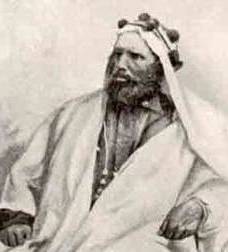 Ras Alula Engida Equbi was born in Tembien, centeral Tigrai. Starting from a simple farmers family, he became the greatest African genral of all times. Serving under Emperor Yohannes IV, he scored so many brilliant military victories over many Ethiopian enemies. He has successfully defeated the Egyptians in Gundet 1875, Gura 1876, Aylet 1887, Senhit 1880, aganist the Mahdists of Sudan; 1885, Metema, aganist Italians; Sahati 1887, Dogali 1887, Amba-Alaje 1889, Mekelle 1896 and Adwa 1896. In all the above battles Ras Alula Aba nega shamed his enemies and made his people proud.
His Holiness Abune Paulos

His Holiness Abune Paulos Patriarch of the Ethiopian Orthodox Tewahedo Church. Fifth Patriarch and Catholicos (re-ese Liqane Papasat) of Ethiopia, Ichege of the See of St. Tekle Haymanot, Archbishop of Axum.
His Holiness Abune Paulos Patriarch of the Ethiopian Orthodox Tewahedo Church. Fifth Patriarch and Catholicos (re-ese Liqane Papasat) of Ethiopia, Ichege of the See of St. Tekle Haymanot, Archbishop of Axum. He was elected in 2006, one of the seven serving Presidents of the World Council of Churches.
Abune Paulos was born in 1935 in Adwa in the state of Tigrai in northern Ethiopia. His education started in the Theological College of the Holy Trinity in Addis Ababa and St. Vladimir Orthodox Seminary in the United States, and afterwards joined the doctoral program at the Princeton Theological Seminary.
General Hayelom Araya
 General Hadush (Hayelom) Araya was born in 1955 in Addi Nebried in western Tigrai. He attended his high school in Adwa and Adigrat. After joining the TPLF he becomes one of the most beloved commanders. He one of the best fighters the TPLF has produced in its 17 years struggle against the brutal fascist regime of Mengistu Hailemariam. He was killed by an Eritrean in Addis Abeba at a restaurant on February 14 1996 in a mysterious circumstances.
List of Kings of the Empire of Axum, Tigrai State

Menelik I......................................204-179
Handadyo.......................................179-178
Auda Amat......................................178-167
Auseyo.........................................167-164
Tzaue..........................................164-133
Gasyo..............................................133
Mawat..........................................133-125
Bahas..........................................125-116
Qawda..........................................116-114
Qanaz..........................................114-104
Haduna.........................................104-95
Wazba...........................................95-94
Hadir...........................................94-92
Kalas...........................................92-85
Satyo...........................................85-68
Filya...........................................68-42
Aglebu..........................................42-39
Ausena..........................................39-38
Beriwas.........................................38-9
Mahsi............................................9-8
Besebazen....................................8 BCE-8 CE
Sartu............................................8-35
Laas............................................35-45
Masenh..........................................45-52
Setwa...........................................52-61
Adgala..........................................61-71
Agba............................................71-73
Masis...........................................73-77
Hakla...........................................77-90
Demahe..........................................90-100
Autet..........................................100-102
Ella Auda......................................102-132
Zagan..........................................132-136 with...
Rema...........................................132-136
Gafale.........................................136-137
Bese Zarq......................................137-141
Ella Azguagua (usurper)........................141-218
Ela Herka......................................218-239
Bese Tzawetza..................................239-240
Wakana.............................................240
Hadaus.............................................240
Ella Sagal.....................................240-242
Ella Asfeha I..................................242-256
Ella Tzegab....................................256-279
Ella Samara....................................279-282
Ella Aiba......................................282-298
Ella Eskendi...................................298-334
Ella Tzaham I..................................334-343
Ella San.......................................343-356
Ella Aiga......................................356-374
Ella Amida I...................................374-404
Ella Wosen.....................................404-414
Ella Ahyawa....................................414-417
Ella Abreha I..................................417-430
Ella Azbeha I..................................430-444
Tesmul Ukal Ahmad..............................444-471
Ella Abreha II.................................471-480
Ella Asfeha II.................................480-485
Ella Sahle I...................................485-499
Ella Adhana....................................499-513
Ella Rete......................................513-514
Ella Asfeha III................................514-519
Ella Azbeha II.................................519-536
Ella Amida II..................................536-542
Ella Abreha II.....................................542
Ella Sahle II......................................542
Ella Gabaz I...................................542-554
Ella Sehul.....................................554-555
Ella Azbeha III................................555-557
Ella Tzaham II.................................557-572
Ella Gabaz II..................................572-593
Ella Agaba (Levi)..............................593-595
Ella Amida III.................................595-606
Jacob I........................................606-636 with...
David..........................................606-636
Armah I........................................636-650
Zitana.........................................650-662
Jakob II.......................................662-671
Caleb (Constantine I)..........................671-700
Beta Israel........................................700
Gabra Maskal I.................................700-714
Constantine II.................................714- ?
Wosen Asgad
Feresanai
Aderazar
Ekla Wadim
Germa Safar
Gergaz
Degna Michael
Baherikela
Hezba Seyon
Asguamgum
Letem
Talatem
Odagosh
Aizur
Dedem Almaz
Wadedem
Demawedim Asfara
Rema Armah II
Degnajan I
Gedajan
Judith
Degnajan II
Del Na’od...................................... ? -c. 915